


Buying property in Poland as a foreigner is governed by a statute that has been in force since 1920 — and the rules are layered in a way that catches buyers who make assumptions without checking. Whether you are an EU citizen, a UK national, an American, a Ukrainian, or an investor from outside the EEA, the answer to “can I buy?” depends not just on your nationality, but on the type of property and its exact location.
This guide, written by the real estate lawyers at CGO Legal, covers the full picture: who can buy what without a permit, when an MSWiA permit is required, what legal due diligence must cover before signing, how the notarial deed works and what it does not do, what the Land Register (Księga Wieczysta) reveals, and how to complete the transaction entirely remotely using a Power of Attorney. Where a topic requires deeper analysis, this page points to the relevant supporting article in the cluster.
Planning to buy property in Poland?
Tell us what you are buying and where you need help. We will use your answers to prepare a quote for legal support.
- 1. Your property
- 2. Your plans
- 3. Your quote
No contact details needed yet.
Your answers help us scope the work. This is not an automated legal assessment.
Where should we send your quote?
Natalia Jakubowska-Zarzycka, our Client Relationship Manager, will respond within 24 hours and coordinate the next steps.
The quote is free. Any legal advice or review is scoped and priced separately before work begins.
📚 REAL ESTATE IN POLAND — COMPLETE LEGAL GUIDE FOR FOREIGN BUYERS
This guide covers every legal aspect of buying, owning and investing in property in Poland — from permit requirements and due diligence to notarial deeds and tax.
- → Buying Property in Poland as a Foreigner (this page)
- Buying an Apartment in Poland as a Foreigner
- PCC Tax When Buying Property in Poland
- Notarial Deed in Poland (Akt Notarialny)
- Power of Attorney for Property Purchase in Poland
- Land and Mortgage Register in Poland (Księga Wieczysta)
- Developer Agreement in Poland (Umowa Deweloperska)
- Mortgage in Poland for Foreigners
- Capital Gains Tax on Property Sale in Poland
- Annual Property Tax in Poland
- Buying Commercial Real Estate in Poland
- Inheritance of Real Estate in Poland by a Foreigner
- Real Estate Investment in Poland: Legal Guide
Can Foreigners Buy Property in Poland?
Yes — but the correct answer depends on two variables that must be established before any agreement is signed: your nationality, and the type of property you are buying.
The legal framework is the Act on the Acquisition of Real Estate by Foreigners (Ustawa o nabywaniu nieruchomości przez cudzoziemców), in force since 1920. The Act creates a general permit requirement — but it also contains a series of exemptions. The result is that many foreign buyers can acquire property in Poland without any authorisation, while others must complete a Ministry of Interior application before the transaction can proceed.
The most commercially significant exemption: a non-EEA citizen can buy an independent residential apartment (lokal samodzielny) without a permit — unless the property is in a border zone. For houses, land, agricultural land, or any property in a border zone, a permit is required for non-EEA buyers. EU and EEA citizens are broadly exempt from permit requirements for all property types.
EU/EEA Citizens vs Non-EU/Non-EEA Citizens
EU and EEA citizens
Citizens of EU member states and EEA countries (Norway, Iceland, Liechtenstein) are generally exempt from permit requirements under the Acquisition Act. A German, French, Dutch or Norwegian national can buy an apartment, house, land, or commercial real estate in Poland without Ministry of Interior authorisation. Limited exceptions may apply to agricultural and forest land — these should be verified before signing in any specific transaction.
Non-EU/non-EEA citizens
Citizens of countries outside the EU and EEA face a more complex picture. The general position is that an MSWiA permit is required before they can acquire most types of real estate in Poland. The most important exemption — the one that most foreign buyers rely on — is for independent residential apartments outside a border zone: non-EEA citizens can generally buy these without a permit. For houses with land, undeveloped land, agricultural land, or any property in a border zone, a permit is required.
UK buyers after Brexit
Following the UK's departure from the EU, UK citizens are treated as non-EU/non-EEA nationals under Polish real estate law. UK buyers can typically purchase an independent apartment in Poland without a permit, but require an MSWiA permit for a house with land, undeveloped land, or any property in a border zone.
US, Canadian, Ukrainian, Israeli, UAE and other buyers
All non-EEA nationals fall into the same general category for permit purposes. Independent apartments are generally available without a permit outside a border zone. Houses and land require a permit. Bilateral treaties between Poland and certain countries may modify some rules — whether a treaty applies to a specific buyer's situation should be verified with a Polish lawyer before relying on it.
Property Types — How the Rules Differ
The permit requirement depends not only on nationality but on the type of property being acquired. The table below sets out the general position by property type and buyer category.
| Property type | EU/EEA citizen | Non-EEA citizen (outside border zone) | Non-EEA citizen (in border zone) |
|---|---|---|---|
| Independent apartment (lokal samodzielny) | No permit | No permit | Permit required |
| House with land | No permit | Permit required | Permit required |
| Undeveloped non-agricultural land | No permit | Permit required | Permit required |
| Agricultural land | Check restrictions | Permit + KOWR rules | Permit + KOWR rules |
| Commercial real estate (individual) | No permit | Permit required | Permit required |
| Off-plan / developer apartment | No permit | No permit (outside border zone) | Permit required |
For a more detailed breakdown — including the Article 8 exemptions under the Acquisition Act and how different transaction structures affect the analysis — see the guide to buying an apartment in Poland as a foreigner.
Can you buy this property? Quick reference
| Property type | EU/EEA citizen | Non-EU/Non-EEA citizen | Key note |
|---|---|---|---|
| Independent apartment — not in border zone | ✓ No permit | ✓ No permit | Art. 8(1)(1) exemption applies |
| Apartment in a border zone | ✓ No permit | Permit required | Border zone removes apartment exemption for non-EEA buyers |
| House with land | ✓ No permit | Permit required | Standard MSWiA permit process |
| Undeveloped land | ✓ No permit | Permit required | Check MPZP zoning before purchase |
| Agricultural land | ⚠ Possible restrictions | Permit + KOWR rules | Requires individual legal assessment |
| Commercial real estate | ✓ No permit | Permit required | Depends on transaction structure |
| Foreign company (non-EEA) | ⚠ Check structure | Permit may be required | Depends on incorporation and control structure |
General overview only. Rules depend on nationality, property location, and transaction structure. Verify with a lawyer before signing.
When Is an MSWiA Permit Required?
The MSWiA permit (zezwolenie Ministra Spraw Wewnętrznych i Administracji) is a formal authorisation from the Polish Ministry of the Interior and Administration. It is required by non-EEA buyers before they can acquire real estate that is not covered by a statutory exemption. The application is filed through a Polish lawyer, supported by documents demonstrating the buyer's ties to Poland and the purpose of the acquisition.
In practice, the process takes between three and six months — sometimes longer. This timeline must be built into the preliminary agreement when a permit is required; a transaction structured without accommodating the permit process creates serious pressure and usually requires renegotiation with the seller.
The consequences of buying without a required permit are severe: the acquisition is legally invalid under Polish law. There is no easy remedy after the fact. The permit position must be assessed before any agreement — private or notarial — is signed.
Exemptions under Article 8 of the Acquisition Act
The most widely applicable Article 8 exemptions: EU/EEA citizens (all property types, with minor agricultural exceptions); non-EEA citizens buying an independent residential apartment outside a border zone; non-EEA citizens who have legally resided in Poland for at least five years after obtaining a permanent or EU long-term residence permit. Whether a specific exemption applies requires individual legal assessment — the exemptions have precise conditions that must be met.
Border Zones — The Restriction Most Buyers Miss
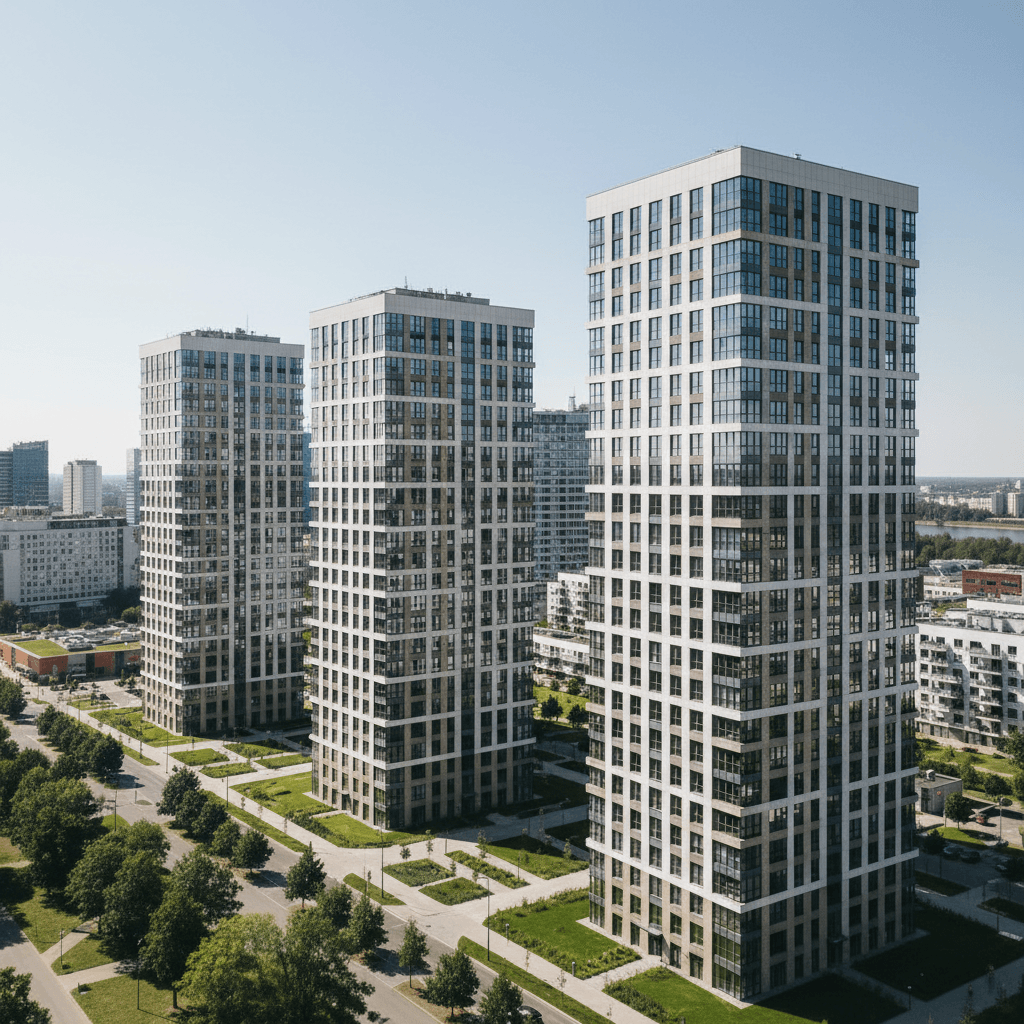
The border zone is the most frequently overlooked variable in Polish property transactions involving non-EEA buyers. The zone runs along Poland's land borders and coastline — meaning properties in Gdańsk, Gdynia, Sopot and the wider Tricity area are often affected, as are properties near the German, Czech, Slovak, Ukrainian, Belarusian, Lithuanian and Kaliningrad borders.
The practical danger: a non-EEA buyer who would not need a permit for an apartment in Warsaw may need one for a comparable property in Gdańsk. If this is not checked before the preliminary agreement is signed and the deposit is paid, the buyer faces a permit process that the transaction was not structured to accommodate. Reversing this — renegotiating the timeline, recovering the deposit, or withdrawing from the transaction — is expensive and not always possible.
Border zone status for a specific address must be confirmed by a lawyer before any agreement is signed. It cannot be assumed from the property type or the buyer's general knowledge of the area.
Legal Due Diligence — What Must Be Checked
Due diligence is the process of verifying the legal status of a property before committing to purchase it. Skipping or shortcutting due diligence is the most common cause of legal problems in Polish property transactions involving foreign buyers.
The Land and Mortgage Register (Księga Wieczysta)
The Księga Wieczysta (KW) is Poland's public property register, accessible at ekw.ms.gov.pl. It has four sections: Section I (property description — confirm this matches what is being purchased); Section II (ownership — confirm the seller is the registered owner, check for co-owners); Section III (encumbrances, easements, third-party rights, pending litigation — all must be reviewed and understood before signing); Section IV (mortgages — all registered mortgages must be discharged before or at completion, or a discharge plan agreed before exchange). A detailed guide to reading the KW is in the dedicated Land Register guide.
Beyond the Land Register
Due diligence must also cover: the local spatial development plan (miejscowy plan zagospodarowania przestrzennego / MPZP) — determines permitted use and future development potential of the plot; building permits and use permits for all structures on the property; agricultural designation of land; border zone status for non-EEA buyers; utility connections; perpetual usufruct status where relevant; and — for investment properties — any existing tenancy agreements.
Checklist: what to verify before signing a preliminary agreement
- KW Section II — seller confirmed as registered owner; no undisclosed co-owners.
- KW Section III — no undisclosed encumbrances, easements, claims or pending litigation.
- KW Section IV — no mortgages, or discharge plan confirmed before exchange.
- MPZP zoning — permitted use and development confirmed for the plot.
- Building and use permits — valid for all structures (houses and commercial property).
- Border zone status — confirmed for non-EEA buyers, not assumed.
- Agricultural designation — assessed; KOWR pre-emption rights identified if applicable.
- MSWiA permit requirement — determined based on nationality and property type before signing.
- Deposit vs advance payment — legal consequences of each understood; correct term used in the agreement.
- Seller's authority to sell — identity and capacity confirmed (particularly where the seller is a company).
Step-by-Step Purchase Process in Poland
The transaction follows a consistent structure across property types. The timeline varies significantly depending on whether an MSWiA permit is required — and how much due diligence the property demands before a preliminary agreement can safely be signed.
| Stage | What happens | Who is involved | Typical timeframe |
|---|---|---|---|
| 1. Legal due diligence | Land Register review (all 4 sections), zoning and building permit check, title verification, border zone and agricultural status assessment. | Lawyer | 1–2 weeks |
| 2. Permit assessment | Nationality and property type assessed against the Act; Article 8 exemptions mapped; permit requirement confirmed or ruled out. | Lawyer | 1–3 days |
| 3. Preliminary agreement (umowa przedwstępna) | Price, conditions, completion date agreed. Deposit or advance payment paid. Private or notarial form chosen based on transaction risk. | Buyer + seller (lawyer reviews/drafts) | 1–4 weeks after due diligence |
| 4. MSWiA permit application (if required) | Application prepared and submitted to the Ministry; supporting documents gathered; Ministry correspondence managed. | Lawyer on buyer's behalf | 3–6 months |
| 5. Notarial deed (akt notarialny) | Ownership transferred before a Polish notary public. Sworn translator present if buyer does not read Polish. PCC collected and remitted by notary. | Notary, lawyer, buyer (or PoA) | 1 day |
| 6. Payment | Purchase price transferred. Notary fees, PCC or VAT, and court registration fee paid. | Buyer (bank transfer) | Day of signing |
| 7. Land Register update | New ownership registered in the Księga Wieczysta. Buyer confirmed as registered owner. | Notary files; court processes | 1–8 weeks after signing |
Preliminary Agreement — Private vs Notarial Form
A preliminary agreement (umowa przedwstępna) is a contract in which both parties agree to complete the sale at a specified price and on agreed conditions within a specified timeframe. It is typically signed after due diligence is complete and a deposit has been agreed.
The form matters. A preliminary agreement signed in notarial form gives the buyer the right to seek court enforcement of the final sale if the seller refuses to proceed — the buyer can compel the transfer of ownership. A preliminary agreement signed as a private document limits the buyer's remedy to recovering a doubled deposit if the seller withdraws. For high-value transactions, notarial form for the preliminary agreement is usually the stronger choice.
Polish law also draws a sharp distinction between a deposit (zadatek) and an advance payment (zaliczka). If the seller withdraws from a transaction where a deposit was paid, the buyer receives double the deposit. If the buyer withdraws, the seller keeps it. An advance payment is simply returned if the transaction does not proceed. Using the wrong term — or not specifying which applies — creates ambiguity that tends to become a dispute. This is a standard point for a lawyer to review before the preliminary agreement is signed.
The Notarial Deed — What It Does and What It Does Not Do
Under Polish law, the transfer of ownership of real estate must be executed by a notarial deed (akt notarialny) signed before a Polish notary public. A private written agreement alone cannot transfer title — regardless of what it says and regardless of whether the purchase price has been paid. This applies to all property types without exception.
What the notary does: verifies identities; records the agreed terms in the deed; ensures the transaction meets formal Polish law requirements; collects and remits PCC tax where applicable; files the Land Register update application; and provides certified copies of the deed to the parties.
What the notary does not do — and this is where foreign buyers routinely go wrong — is act in the buyer's interest. The notary is an impartial public officer. They will not: review contract terms for the buyer's benefit; conduct due diligence on the title; flag commercially risky clauses; advise on permit requirements; check border zone status; or negotiate on the buyer's behalf. Independent legal representation is needed alongside — not instead of — the notarial process. A full analysis of what happens at the notarial deed signing is in the notarial deed guide.
Transaction Costs — PCC, VAT, Notary Fees, Court Fees
The transaction costs are predictable once the market (primary vs secondary) and property type are established.
| Cost | Rate / Amount | When it applies | Notes |
|---|---|---|---|
| PCC (Civil Law Transaction Tax) | 2% of agreed price | Secondary market purchases | Paid at notarial deed signing; mutually exclusive with VAT |
| PCC — first-time buyer exemption | 0% | Qualifying first-time buyers, secondary market | Conditions apply; confirm eligibility before signing |
| PCC — bulk buyer (6th+ unit in same project) | 6% | Buyers of 6+ units in same development | Anti-investor measure; verify current scope |
| VAT | 8% (residential up to 150 m²) or 23% | Developer / primary market purchases | Included in developer's price; not combined with PCC |
| Notary fee (taksa notarialna) | Statutory scale; typically 0.2%–1% of value | All notarial deed transactions | Statutory maximums; negotiate where possible |
| Court registration fee | 200 PLN | Land Register update (ownership) | Filed by notary on completion |
| Mortgage registration fee | 200 PLN | Where Polish mortgage financing is used | Separate entry in KW Section IV |
The PCC vs VAT distinction is straightforward but frequently misunderstood. Developer purchases include VAT — no PCC is charged additionally. Secondary market purchases from private sellers attract PCC at 2% — no VAT is charged. The two taxes are mutually exclusive. A full analysis of PCC, the first-time buyer exemption, and when the 6% rate applies is in the PCC tax guide.
Transaction costs at a glance
| Cost | Rate | When it applies | Who pays |
|---|---|---|---|
| PCC tax | 2% | Secondary market (resale) purchases | Buyer |
| PCC — first-time buyer exemption | 0% | Secondary market, qualifying first-time buyers | N/A — confirm eligibility |
| PCC — bulk buyer surcharge | 6% | 6th+ apartment in same project | Buyer |
| VAT | 8% or 23% | Primary market (developer) — included in price, replaces PCC | Included in developer price |
| Notary fee (taksa notarialna) | ~0.2%–1% of value | All transactions — statutory maximum scale applies | Buyer (usually) |
| Court registration fee | 200 PLN | Land Register ownership update | Buyer |
| Legal fees | Negotiated | Where legal representation is used | Buyer |
| Agency fee | 2–3% + VAT | Where a real estate agent is used (not mandatory) | Buyer and/or seller |
Tax rates as at date of last page update. Rules may change — seek individual advice on your specific transaction.
Developer Agreement (Off-Plan Purchases)
Buying off-plan directly from a developer is governed by the New Developer Act (in force since 2022), which introduced mandatory buyer protections that fundamentally changed the risk profile of developer purchases in Poland.
The key protections: a mandatory bank escrow account holds buyer payments during construction — funds are not released directly to the developer. The Developer Guarantee Fund (DFG) provides additional protection if the developer fails and escrow funds are insufficient. Developers must provide a prescribed prospectus document before signing.
Before signing a developer agreement (umowa deweloperska), a lawyer should review: the escrow mechanism; DFG contribution confirmation; construction schedule and completion provisions; permitted tolerances for finished apartment size; delay penalties; and any Article 777 clause (voluntary submission to enforcement — standard in Polish notarial practice, but its specific terms require independent review). The full breakdown is in the developer agreement guide.
Remote Purchase — Buying Property in Poland Without Traveling
The entire property purchase process in Poland can be completed without traveling there. The mechanism is a Power of Attorney (pełnomocnictwo) — a legal document authorising a Polish lawyer to act on the buyer's behalf at every stage of the transaction: due diligence, signing the preliminary agreement, attending the notarial deed, paying the purchase price, and receiving confirmation of the Land Register update.
A Power of Attorney executed outside Poland must generally be: notarised in the country of execution; apostilled (if that country is a party to the Hague Apostille Convention); and sworn-translated into Polish. Requirements vary by jurisdiction. CGO Legal advises on the correct form for each country of residence before the document is prepared — the requirements for a US-executed PoA differ from those for a UK-executed one. The full workflow for remote purchase is in the dedicated Power of Attorney guide.

Does Property Purchase Give Residence Rights?
No. Purchasing real estate in Poland does not automatically grant a residence permit or any right to remain in Poland. Poland does not operate a golden visa or investor visa scheme under which property purchase qualifies for residency. Property ownership may be taken into account as supporting evidence of ties to Poland when applying for a temporary residence permit on other grounds — but it is not itself a legal basis for residency.
If you want to live in Poland, you need a separate basis: EU free movement rights (for EU/EEA citizens), a work permit and temporary residence permit, family reunification, or a company formation route. CGO Legal advises on Polish immigration and residence permits separately from property conveyancing.
Buying a house in Poland — what makes it legally different
Buying a house in Poland is legally more complex than buying an apartment, and not only because of the MSWiA permit requirement for non-EU buyers.
When you buy an independent apartment, you acquire the flat and a share in the building’s common parts. When you buy a house, you buy the house and the land it sits on — two elements that must each be verified, checked, and transferred separately.
For non-EU/non-EEA buyers, buying a house typically means: an MSWiA permit is required before completion; the land title must be verified independently; the zoning of the plot must be confirmed; and the house’s building permits and use designation must be reviewed.
Key due diligence points specific to house purchases include:
- Confirmation that all structures on the plot have valid building permits (pozwolenie na budę) and that construction was completed lawfully (pozwolenie na użytkowanie).
- Review of any access rights, easements or encumbrances registered in the Land Register.
- Checking utility connections — water, sewage, electricity, gas — or private solutions if the property is rural.
- Checking whether the plot is held under full ownership or historic perpetual usufruct (użytkowanie wieczyste).
EU and EEA citizens buying a house in Poland do not need an MSWiA permit, but the due diligence requirements above apply to all buyers.
Common Mistakes Foreign Buyers Make
Most legal problems in Polish property transactions involving foreign buyers are predictable and avoidable. They do not arise from unusual circumstances — they arise from assumptions carried over from other jurisdictions, wrong sequencing, or issues that were not checked because they were not known to exist.
Assuming the apartment exemption applies everywhere
The exemption for independent apartments does not apply in the border zone. A non-EEA buyer who does not check border zone status before signing in Gdańsk or Sopot will discover a permit requirement after a deposit has been paid.
Treating the notary as the buyer's legal advisor
The notary ensures the transaction is formally valid. The notary does not check whether the terms are fair, whether the title is clean beyond the formal register, or whether the permit requirement has been correctly assessed. Buyers who rely solely on the notary often discover the gap too late.
Signing the preliminary agreement before completing due diligence
A deposit structured as a zadatek is retained by the seller if the buyer withdraws. Discovering a mortgage in Section IV, an agricultural designation, or a permit requirement after the deposit has been paid is a difficult position with limited options.
Confusing zadatek (deposit) with zaliczka (advance payment)
The legal consequences differ sharply. Using the wrong term — or not specifying which applies — creates ambiguity that becomes a dispute. This must be specified clearly in the preliminary agreement before signing.
Underestimating the MSWiA permit timeline
Structuring the preliminary agreement without building in three to six months for the Ministry process — where a permit is required — creates pressure that typically forces either a rushed completion or a renegotiation with a reluctant seller.
Assuming property purchase gives residence rights
Poland does not have a golden visa scheme. Owning property here does not give any right to live here. Non-EEA buyers who plan to relocate need a separate legal basis for residency — this should be planned separately from the property transaction.
How CGO Legal Supports Foreign Buyers
CGO Legal advises foreign individuals and companies on real estate acquisitions across all property types — apartments, houses, land, agricultural land and commercial real estate — and all buyer nationalities, including EU, EEA, UK, US, Canadian, Ukrainian, Israeli and UAE buyers.
The work typically covers: assessing the permit position before any agreement is signed; conducting legal due diligence on the Land Register, title, zoning and building permits; reviewing or drafting the preliminary agreement; managing the MSWiA permit application where required; attending the notarial deed on the buyer's behalf or alongside them; and confirming the Land Register update after completion. For remote buyers, we manage the full process under a Power of Attorney — including coordinating sworn translation at the notarial signing.
The point at which we add the most value is before the preliminary agreement is signed — when the legal position can still be mapped correctly, the structure can accommodate any permit timeline, and the buyer's position in the transaction can be protected from the outset.
Official Sources
The legal framework for foreign property acquisition in Poland is set out in publicly accessible official sources:
- ekw.ms.gov.pl — Electronic Land and Mortgage Register: public search of all Księga Wieczysta entries by register number.
- gov.pl — MSWiA permit information: official Ministry of the Interior and Administration page on permit applications for foreigners.
- ISAP — Act on the Acquisition of Real Estate by Foreigners: consolidated text of the Act of 24 March 1920 in the Polish Parliament's legal database.
- podatki.gov.pl — PCC guidance: Polish tax authority guidance on the Civil Law Transaction Tax.
Next Steps
The most consequential decisions in a Polish property transaction for a foreign buyer are not taken at the notary's table — they are taken earlier: when the preliminary agreement is drafted, when the deposit structure is chosen, and when the permit position is (or is not) properly assessed. Correcting those decisions after the fact is considerably more expensive than getting them right at the beginning.
If you are at an early stage — evaluating a specific property, comparing locations, or considering whether to buy at all — the right moment to take legal advice is before the estate agent's reservation form appears. If you are already in a transaction, the right moment is before the preliminary agreement is signed. The deeper into the transaction, the narrower the options.

Jakub Chajdas
Contact an expert
info@cgolegal.com
+48 22 873 79 90
For over 12 years of his work at CGO Group Jakub has been supporting foreign investors in setting up and developing their business in Poland. He provides an allround legal and tax suport for corporations with foreign capital.
Till date Jakub has been trusted by Clients from countries such as e.g. USA, UK, Canada, Italy, UAE, Israel as well as Belarus, Ucraine and Baltic States. In his legal practice Jakub supports entrepreneurs with main focus on IT, HR, production and real estate sectors.
Jakub endorses efficient and comfortable business cooperation. If you are interested in tax and legal matters related to setting up and developing a business in Poland he is the person you should contact with. Jakub provides support both in English and Italian.
FAQ – buying property in Poland as a foreigner
Can a foreigner buy property in Poland?
Yes. Foreigners can buy property in Poland. The rules depend on your nationality and the type of property. EU and EEA citizens generally face no restrictions. Non-EU/non-EEA citizens can buy independent residential apartments without a permit in most cases, but typically need a Ministry of the Interior (MSWiA) permit to buy a house with land, undeveloped land, or any property in a border zone.
Can a non-EU citizen buy a house in Poland?
Yes, but a non-EU/non-EEA citizen buying a house in Poland — including the land it sits on — will typically need a permit from the Polish Ministry of the Interior (MSWiA) before the transaction can be completed. The permit process usually takes between three and six months. Independent legal advice before signing any agreement is strongly recommended.
Can a foreigner buy an apartment in Poland without a permit?
Yes, in most cases. Non-EU/non-EEA citizens can generally buy an independent residential apartment without an MSWiA permit. The exception is if the apartment is in a border zone — coastal cities such as Gdańsk, Gdynia and Sopot may be affected. Verify border zone status before relying on the exemption.
Do UK citizens need permission to buy property in Poland?
Since Brexit, UK citizens are treated as non-EEA nationals. They can generally buy an independent apartment outside a border zone without a permit, but require an MSWiA permit for a house with land, undeveloped land, or any property in a border zone.
Can I buy property in Poland remotely?
Yes. The entire transaction can be completed without traveling to Poland by granting a Power of Attorney to a Polish lawyer. The PoA must typically be notarised, apostilled and sworn-translated into Polish. CGO Legal manages remote property purchases for international buyers regularly.
What does a notary do — and what don't they do?
The notary ensures the transaction is formally valid: verifies identities, records the agreed terms, collects PCC, and files the Land Register update. The notary does not conduct due diligence, review terms for the buyer's benefit, advise on permit requirements, or negotiate on the buyer's behalf. Independent legal representation is needed alongside the notary.
What is PCC tax and how much is it?
PCC (Civil Law Transaction Tax) is 2% of the purchase price on secondary market transactions, collected at the notarial deed. It does not apply to developer purchases, which carry VAT instead (8% for residential up to 150 m²). First-time buyers may qualify for a 0% exemption. The two taxes are mutually exclusive.
Does buying property in Poland give me residence rights?
No. Poland does not have a golden visa scheme. Owning property does not grant a residence permit or any right to remain in Poland. A separate legal basis for residency is required.
What should I check in the Land Register?
All four sections: Section I (property description), Section II (ownership — confirm seller is registered owner), Section III (encumbrances, easements, third-party rights, litigation), Section IV (mortgages — must be discharged before or at completion). The register is publicly searchable at ekw.ms.gov.pl.
Can a foreign company buy real estate in Poland?
Yes, but permit requirements depend on where the company is incorporated and who controls it. EEA-incorporated companies generally benefit from the same exemptions as EU/EEA individuals. Non-EEA companies — or companies with significant non-EEA shareholding — may require an MSWiA permit. Individual legal assessment is required before any agreement is signed.
Should I use a lawyer if a notary is already involved?
Yes. The Polish notary is an impartial public officer — not the buyer's advisor. They will not conduct due diligence, flag risky clauses, advise on permit requirements, or negotiate on your behalf. An independent Polish property lawyer protects your specific interests throughout the transaction — from due diligence to Land Register update.
What is the difference between a zadatek and a zaliczka?
A zadatek (deposit) means: if the seller withdraws, the buyer receives double the deposit; if the buyer withdraws, the seller keeps it. A zaliczka (advance payment) is simply returned if the transaction does not proceed. The choice must be specified clearly in the preliminary agreement — using the wrong term creates ambiguity that tends to become a dispute.
